green plantain frying at six, cloud on the ridge by two
Reserve a nine night coffee farm trip in Quindío
Nine nights are held for you on two working coffee farms in Quindío and in a guesthouse in Salento, from $2,337 per person on two sharing. February is the month the mornings hold, with the ridge clear from first light until about one o'clock and the farm track dry enough to walk down in shoes. You go for the slope itself, which runs at a grade that makes you stop every two hundred yards whether or not you meant to.
Nine nights, from $2,337 per person.
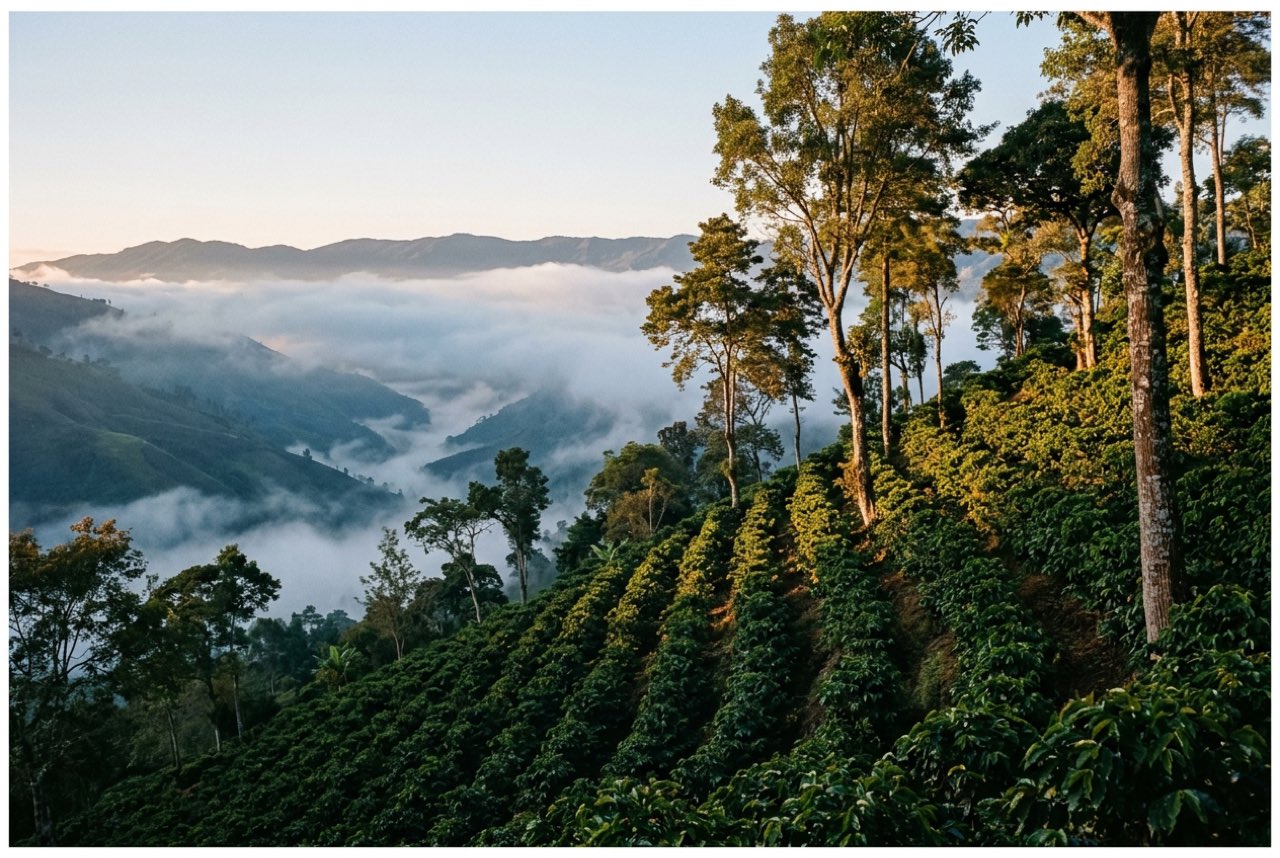
Reserve a nine night coffee farm trip in Quindío and what you are holding is three addresses rather than a circuit: four nights on a farm on the ridge above the Quindío river at 5,840 feet, three nights in a guesthouse two streets off the main square in Salento, and two nights lower down at 4,660 feet where the afternoons are warmer and the insects come back after dark. Starts run weekly through February. The same nine nights in any other month would be a different trip, and mostly a wetter one.
February sits in the second half of the short dry stretch that opens around the middle of December. In practice that means the ridge is clear from first light, which is 6:20 and does not move by more than a few minutes all year, until somewhere between one and two in the afternoon, when cloud comes up the valley from the west and stays on the farm. You will be rained on. You will not be rained on all day, which is what happens in April. Figure five inches across the month against eleven in May.
Daylight here is about twelve hours long every day of the year, and it ends quickly. At four degrees north there is no long evening; the light is gone twenty five minutes after the sun touches the ridge. That is why dinner on both farms is at seven, and why nobody offers you a second sitting.
When it goes
Weekly starts through February
any week in one month: weekly starts through the month, and no other month works
What is reserved
A nine night coffee farm trip in Quindío
Nine nights, from $2,337 per person. Send a booking request
One double room is held for nine nights across three addresses, four on the upper farm, three in town and two on the lower farm, with the road transfers between them, a full mill morning and two guided walking days all fixed to your named dates before anything is confirmed.
The two farms sit 1,180 feet apart in altitude and that difference decides almost everything about them. The upper one runs from 5,500 to 6,100 feet, carries mostly Castillo with two older blocks of Caturra, ripens late, and gets cloud on it from about two in the afternoon every day of February. The lower one at 4,660 feet is warmer by roughly eight degrees, picks three weeks earlier, and has mules rather than a road for the last quarter mile. Both are planted across the fall line in rows a meter apart, so a picker works all day with one leg downhill, and both interplant plantain and guamo for shade and for something to sell between crops. The buildings are guadua bamboo plastered with mud, cut at four or five years from stands that put on as much as four inches a day. Salento, where you spend the middle three nights, stands at 6,220 feet with about 7,000 people in it, and it empties on Monday morning after the weekend arrivals from Armenia and Pereira have gone home.
Nine nights in a double room, four on the upper farm at 5,840 feet, three in a guesthouse two streets off the main square in Salento, two on the lower farm at 4,660 feet; breakfast every morning, cooked at 6:30 on the farms and from 8:00 in town; dinner on the six farm nights, at 7:00 and not later; the road transfer from the regional airport, about 55 minutes on pavement and then 25 minutes of unpaved switchback; both transfers between the three addresses; a full mill morning with the farm's own picker, from pulping through a 16 hour ferment to the drying beds; a tasting of eight lots at the upper farm with the crust broken at four minutes; two guided walking days, one on the wax palm loop and one on the mule tracks below the lower farm; the jeep seat up to the valley head and back; drip coffee on both farms, ground the morning it is drunk; the operating company's own English speaking guide on both walking days, working under its own license.
The flight to Colombia, which is your own arrangement and which this office does not sell, roughly $540 to $910 round trip from Kansas City in February; lunch on all nine days, $4 to $12 in Salento and about $7 at the farms; both dinners in town, $9 to $18 a head, more if you take the whole trout; the valley entrance fee, about $2; the hummingbird spur off the palm loop, about $5 including the hot cane sugar drink at the top; a mule for the steep section of the loop, $18 to $25; laundry at either farm, about $6 a load; anything you drink beyond coffee and cane sugar water, $2 to $6; tips for the picker, the cook and the driver, which are yours to judge and run $10 to $30 across the week; cash in Colombian pesos for all of it, because the farms take nothing else and the town has two machines that are often empty.
The palm loop climbs about 1,540 feet in the first two and a half miles on clay that holds water even in a dry month, and the first hour crosses the Quindío river on six wire bridges wide enough for one person, each of which moves when you are on it. The upper farm sits at the end of 25 minutes of unpaved switchback and there are 38 steps between the bedroom and the kitchen, with no rail on the lower flight. Nights on both farms drop to about 55 degrees, the rooms have no heating, and the shower is warmed by an element in the pipe, which means one person at a time. The lower farm has no phone signal after dark and the evening ends when the kitchen light goes off around nine, so if you need something to happen in the evening, this is the wrong nine nights.
The slope, and why it is planted the way it is
A hectare on the upper farm gives somewhere near 1,800 kilos of dry parchment in a good year, and the farm is nine hectares, so the arithmetic on what a household here lives on is not difficult and the owner will do it out loud if you ask. Castillo covers most of the ground because it resists leaf rust; the two blocks of Caturra survive because he prefers the cup and takes the loss. The rows are a meter apart on ground that falls away at better than thirty degrees, which is why nothing here is machine picked and never will be.
You get the mill morning on your second full day. Cherries come in around four in the afternoon, so what you see at seven is the previous day's: pulped through a hand cranked drum, then sitting in a concrete tank under their own mucilage for sixteen hours, then washed in the channel until the beans squeak against each other. Drying is on a raised bed under clear plastic, turned with a wooden rake every two hours, eight to fourteen days depending on how much of the afternoon was cloud. Nobody is in a hurry and there is nothing to watch for long stretches, which is the honest description of the day.
The buildings are guadua, a bamboo cut at four or five years, framed and plastered with mud. Nearly everything standing in this department went up that way after the ground moved in January 1999, so the farmhouse you sleep in has a 1930s floor plan and a twenty five year old roof over it. The walls hold heat badly. At 5,840 feet that is deliberate, and it also explains the weight of the blankets.
The palm valley, and what the walk costs you
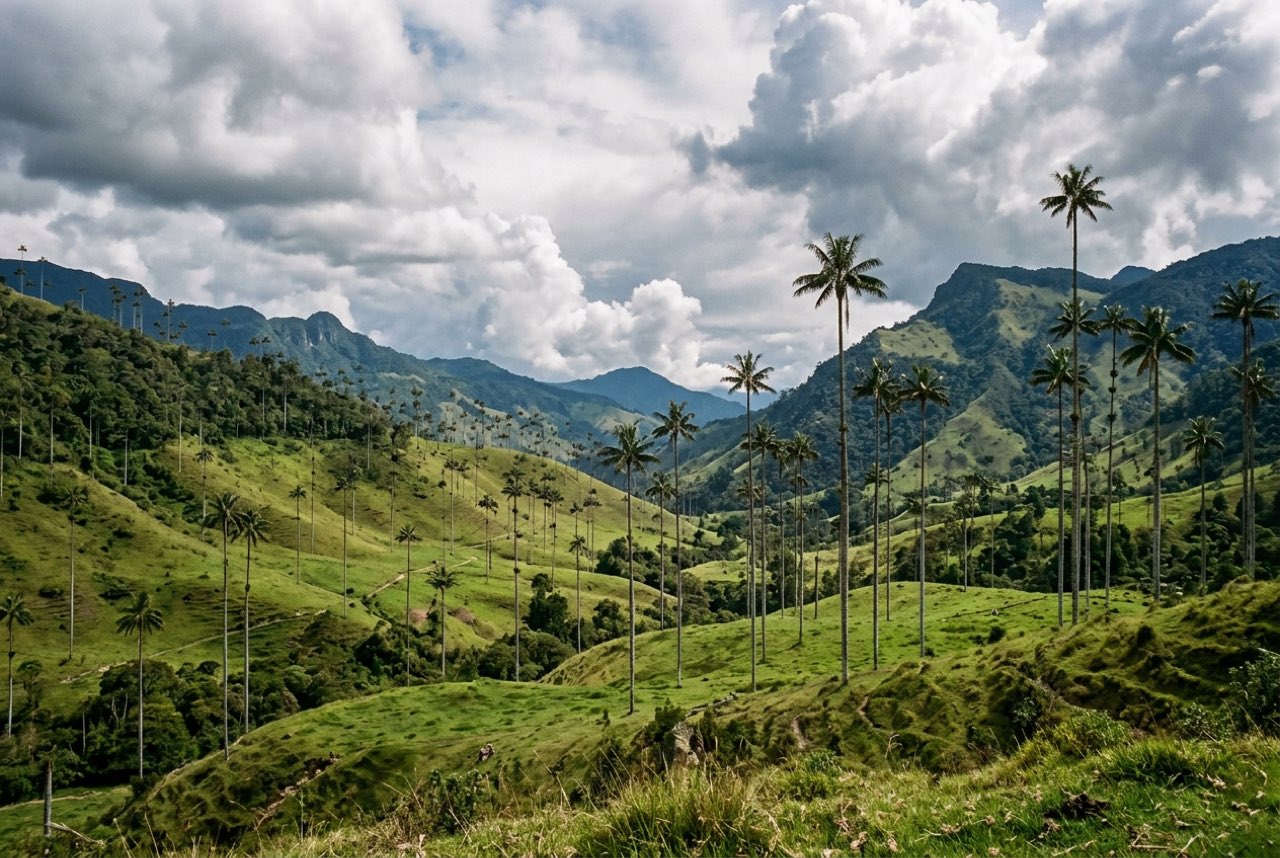
The jeep leaves the square when six people are in it, which in February is usually the second one out, between 7:30 and 8:00. It is eleven kilometers to the valley head and takes half an hour, because the last four are gravel and the road is a single lane with pullouts. From the meadow at 7,900 feet the loop runs counterclockwise and the first hour belongs to the river: six wire bridges over the Quindío, one person at a time, each one swinging under you. After the last crossing the track turns up and takes back 1,540 feet in about two and a half miles. Five hours for the ring is normal. Four is fast and seven is not unusual if the clay is wet.
The palms stand on the far side of that climb, above 8,500 feet, in open cattle pasture with nothing else near them. They reach 200 feet, taller than any other palm anywhere, and they grow so slowly that the ones on the ridge were there before the pasture was cleared around them. What no photograph tells you is the temperature. It can be 48 degrees with wind at eleven in the morning, two hours after you left a farm where a shirt was enough, and there is no shelter between the top of the climb and the descent.
Take the mule for the steep section if your knees have opinions. It is not a defeat and half the people on the track do it.
Driest stretch of the year, near four inches of rain; the last of the main crop is still on the drying beds.
About five inches, mornings clear to one o'clock, cloud on the ridge after two; almost nothing ripe on the trees.
Rain climbs to eight inches; flowering breaks after the first heavy week and the slopes smell of it for four days.
The first wet season, eleven to twelve inches a month; the palm loop is ankle deep clay above the last bridge.
A drier window, warm and windy; the secondary crop, the mitaca, is picked on the lower ground.
Broken weather, grass growing fast, ridges clear at breakfast and shut by noon.
Second wet season and the main harvest at once, ten inches of rain, pickers on the slopes and the mills running past dark.
Rain falls away, drying beds full, and the town fills with Colombian families from the twentieth through the first week of January.
Three nights in the town, two on the lower farm
Salento is one long street of single story fronts painted in colors that were chosen to be seen from the end of the block, and 250 steps at the top of it climbing to the cross above the town. Go up at 6:30 and you have it to yourself. Go up at four on a Saturday and you are in a line. The weekend arrivals come from Armenia, forty minutes down the valley, and from Pereira, and by ten on Monday the street is quiet enough to hear the shutters going up.
Two things to do with the town nights, both of them local rather than arranged for you. Trout comes from ponds fed by cold streams above the town and is served whole with a fried green plantain the width of a dinner plate, which is a plate of food for two people who have been walking. And there is tejo, a game in which a metal disc is thrown sixty feet at packets of gunpowder set in a clay bank, played in a shed with a concrete floor by people who have played it since they were nine.
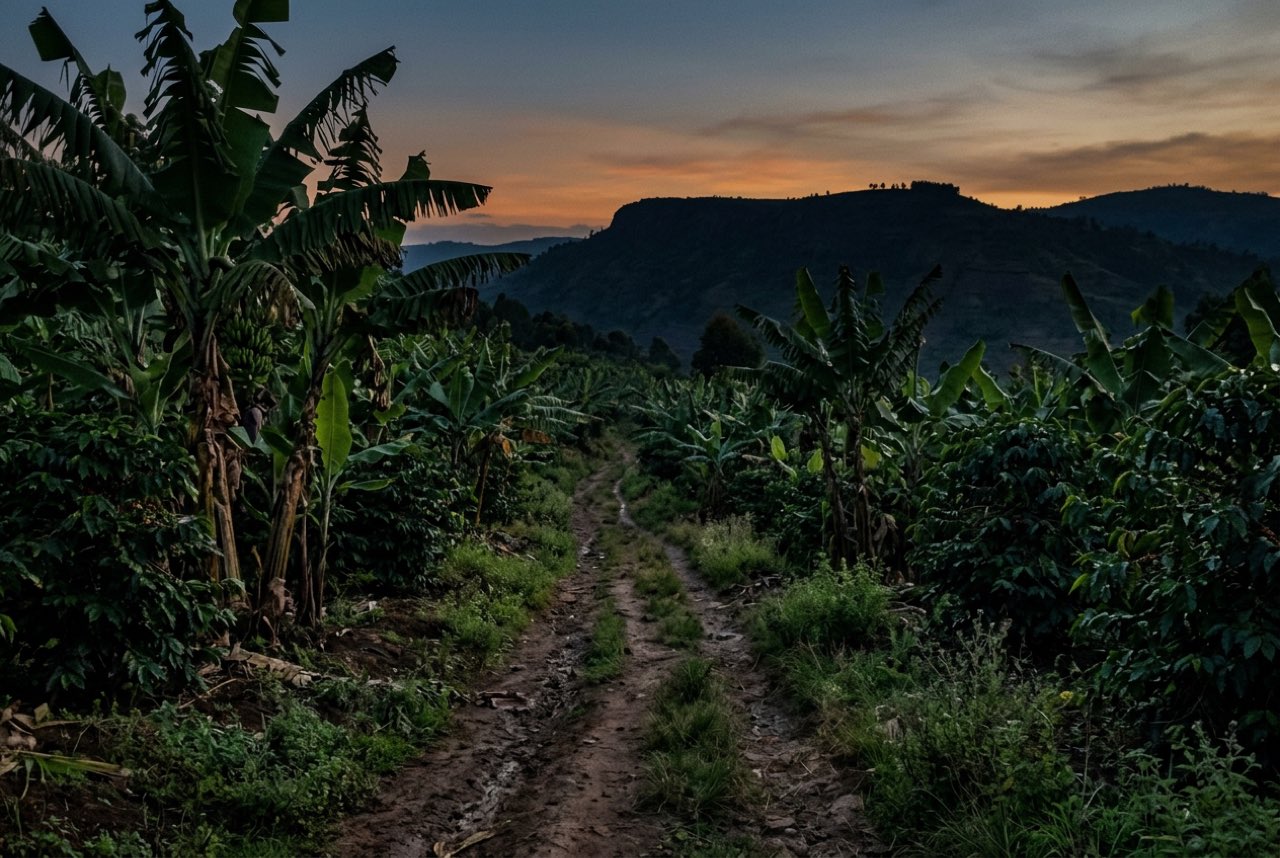
The last two nights are lower, warmer and quieter. The road stops a quarter mile short of the lower farm, so a mule takes the bags up and you walk the rest. That farm picks three weeks ahead of the upper one, keeps its own bees, and dries on open beds instead of under plastic. Its second walking day is mule tracks rather than a marked loop, four to five miles, no gate, no ticket and nothing to look at except what the slope is doing.
Holding the dates in February
Name the week you want and this office goes and gets a real answer. Putting a firm figure on exact named dates takes two to four working days, because the two farms hold four rooms between them and the reply depends on who else has asked for the same nights. Until that comes back, the figure on this page is a starting point and nothing more.
Nothing that carries or houses a traveller on this trip belongs to Third Coast Dispatch. The farms are family businesses, the jeep belongs to the man driving it, and the guide on both walking days works for the company that runs the ground in Quindío. That company sends the bill directly, under its own contract with you, at the figure it quotes. Third Coast Dispatch Bookings LLC takes no payment of any kind at any stage.
The flight out is not part of this and this office does not sell airfare. Most people come in through the regional airport an hour down the valley, some through the larger one about ninety minutes north, and this office needs to know which one and at what hour so the road transfer is waiting. The office does not advise on entry documents, insurance or vaccinations, and will not pretend to.
Third Coast Dispatch is the name used by Third Coast Dispatch Bookings LLC. This office is at 600 SW Jefferson St, Suite 302, Lee's Summit, MO 64063, it answers people across the Kansas City metro and out through the rest of Missouri, and the number is +1 (816) 525-2846. Questions about the walking, the beds or what February actually does go to bookings@thirdcoastdispatch.com. If a figure on this page is wrong, write to corrections@thirdcoastdispatch.com and it will be corrected.
Send this office a booking request
Open 24/7, this form will take a booking request whenever you write it. Nowhere on it is a card number requested and nothing is charged, because no money is ever owed to this office. Whatever reaches the form is opened in the order it landed, and an answer goes back inside one working day.
Nowhere on this page is a card number requested, and none is kept by this office anywhere. Writing costs you nothing and ties you to nothing. Asking is not the same as holding: your date belongs to whoever asks next until the operating company has confirmed it on paper and you have read what it requires of you.