beech shade, dry grass, water running forty feet under the path
Reserve a August departure to the Vercors, eight nights walking
This office reserves eight nights on the Vercors plateau in southeastern France, five in one village and three in another, with a small hire car for the week, at $2,947 per person on two sharing. The walking starts from the door of both places, and one full day of the eight goes underground into a gallery cut by the water that runs beneath the pasture. The flight into France is yours to arrange.
Eight nights, from $2,947 per person.
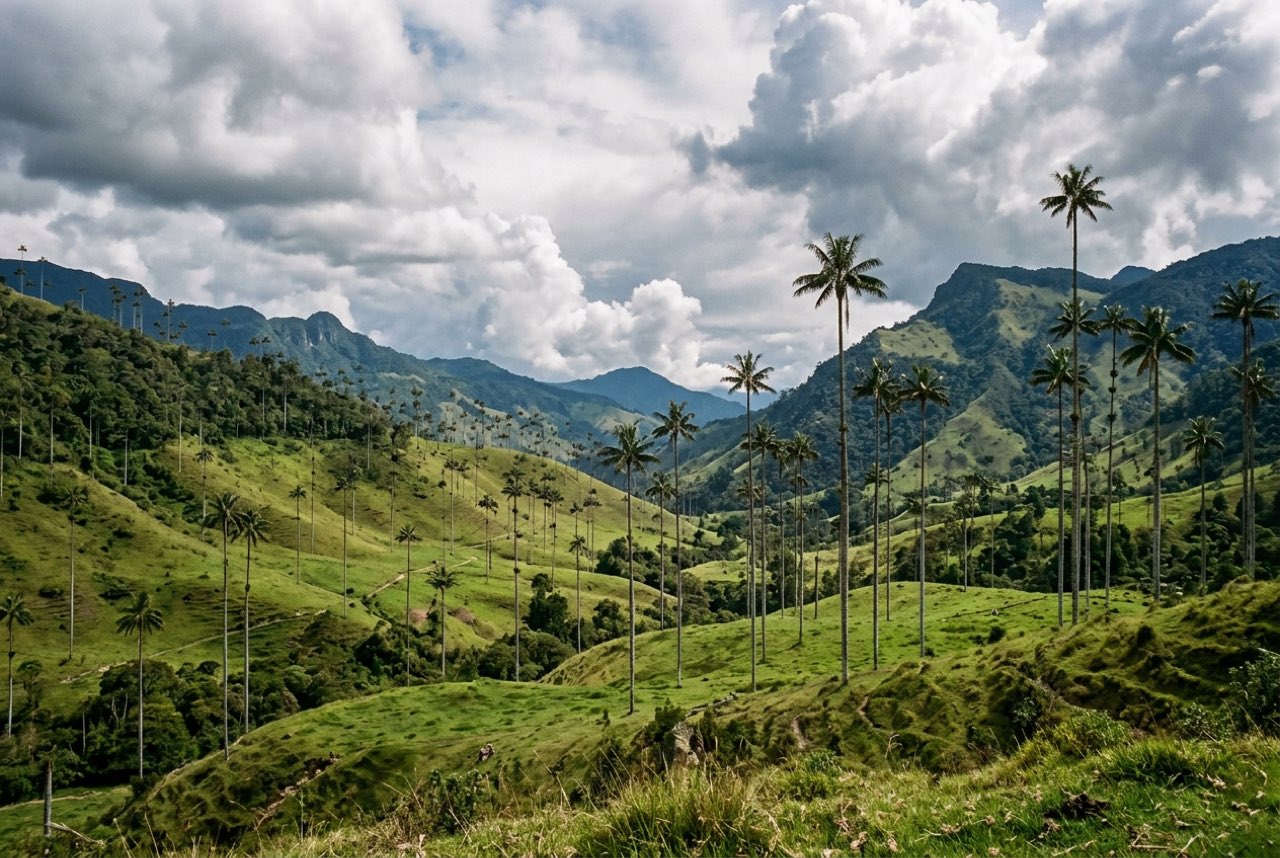
Eight nights, five in one village and three in another, on a block of limestone that stands about a thousand metres above the valley floor and ends on its eastern side in a wall visible from ninety kilometres away. You reserve a August departure to the Vercors and the week is the one that suits you, because starts run every Saturday through that month and nothing is held outside it.
The plateau is not a mountain range in the way the ranges around it are. There is no ice on it, nothing on it needs a rope, and the highest ground is 2,341 metres, which in this part of France is unremarkable. What it has instead is emptiness at a scale that catches people out: a reserve of 17,000 hectares in the middle with no public road, no village, no power line and no permanent water, ringed by a road system built in the nineteenth century that goes around the outside because going across was never worth the francs.
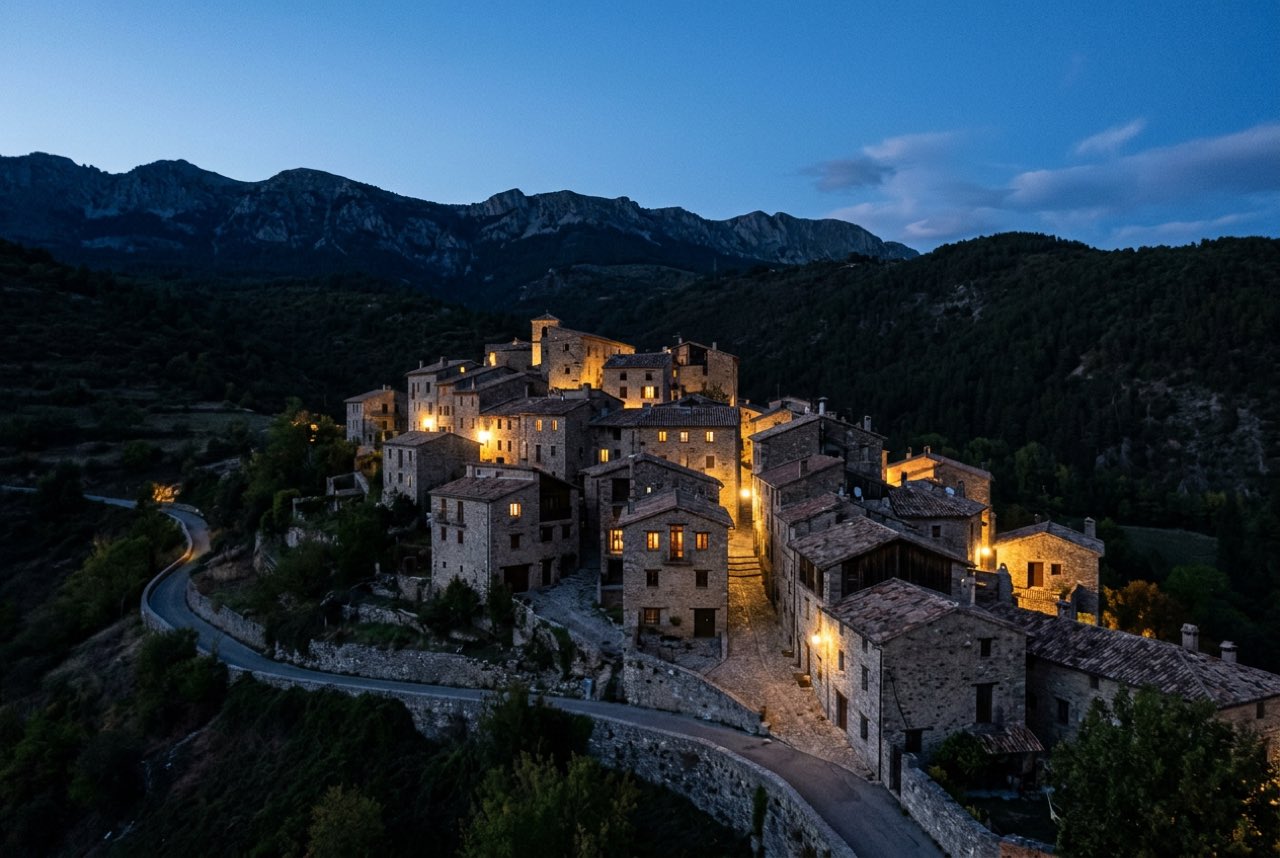
The two villages are forty minutes apart by car and about six hours apart on foot. The first sits at 1,050 metres in a bowl of pasture with cliff on three sides. The second is smaller, 945 metres, on the southern half where beech gives way to box scrub and the afternoons run four or five degrees warmer. Five nights, then three.
When it goes
Weekly starts through August
any week in one month: weekly starts through the month, and no other month works
What is reserved
A August departure to the Vercors
Eight nights, from $2,947 per person. Send a booking request
Rain that is gone before the coffee
Everything about walking here follows from the rock. The limestone was laid down flat, tilted, and then drilled through by its own water, and it is full of vertical shafts that people here call scialets, some two metres across and eighty deep, opening in the middle of a field with nothing around them. What falls on the pasture in a July storm is off the surface in under an hour. It shows up again three or four days later at the base of a cliff eight kilometres away, at about 8 degrees C, 46 F, in enough volume to have turned mills for four hundred years.
That is why the route list gives you a turnaround hour instead of a turnaround point. On the high reserve there is no stream, no tap and no shepherd's spring between the last road and the far rim, a distance of roughly twenty kilometres. Three litres a head in August is the working figure, and it is what ends the day. Two of the six routes stay below the pasture line for that reason alone and are the ones to take if the forecast is 29 degrees.
The springs at the foot of the cliffs run all summer regardless. One comes out of a wall inside a cirque of vertical rock and falls two hundred metres in five steps; by mid August it is down to something like a fifth of its April volume, and you can walk in under the lowest step, which will not tempt you a second time.
Reserved as eight nights of accommodation, one double or twin room held in a small family run hotel in the first village for five nights and in a converted farm building in the second for three, with a compact hire car held for eight days from the valley and returned to the same place.
The plateau sits between 900 and 1,200 metres and the rock under it is limestone roughly 600 metres thick, so rain that falls on the summer pasture is off the surface within the hour and comes out again as a spring eight kilometres away and four hundred metres lower. The eastern side ends in a wall: the high point reaches 2,341 metres and the free standing tower of rock beyond it stands at 2,087 and was first climbed in June 1492, by men with ladders, which is about as early as anybody climbed anything for the sake of it. Three roads leave the western side and all three were cut by hand into cliff faces between 1854 and 1898; one of them runs four kilometres on a ledge with three hundred metres of air below the outside wheel and no barrier for most of that. Above 1,600 metres the ground opens into pasture crossed by dry stone folds, and there is no drinkable water for about twenty kilometres, which is why the day is limited by what you can carry and not by your legs. Chamois feed on the same eastern slopes from first light until about nine in the morning and then lie up in the shade until six. The mouflon put on the hill in the 1950s have stayed at the southern end ever since and will not come within four hundred metres of a person.
Five nights in a small family run hotel in the first village, room with private bathroom, breakfast each morning; three nights in a converted farm building in the second village, same standard, breakfast included; a compact hire car for eight days with unlimited kilometres, collected in the valley and returned there; the autoroute tolls between the valley and the foot of the plateau on both transfers; entry and the guided hour for the cave day, held at a fixed time and in your name; a 1:25,000 map of the plateau posted to you before you travel; a written route list for six walks giving distance, climb in metres and the hour to turn around; the reservation placed with each company in your name, with the confirmation numbers and the local telephone numbers written out for you.
Round trip air from the middle of the United States into the nearest valley airport, arranged by you, $890 to $1,460 depending on the week; fuel for the car, $95 to $130 across eight days at plateau distances; lunches, which on walking days means bread and cheese bought the evening before, $9 to $16 a day; dinners, $28 to $52 a head with a half bottle; the second cave on the northern rim if you want it, $16 to $22 each; parking in the two towns below the plateau, $2 to $5 an hour; laundry in the village, $6 to $12 a load; anything at all beyond breakfast at either property; a second driver added to the car, $11 to $14 a day.
Do not reserve this if a day out means under two hours on foot: five of the six routes run seven to eleven miles with 1,900 to 3,400 feet of climb, and there is no shorter version of them that reaches anything worth reaching. It is wrong for anyone who will not drive a road one lane wide with the drop on the passenger side and no wall, because two of the three ways off the plateau are exactly that. Children under about ten will be bored by the fourth day and will say so on the third. Anyone who needs a lift in the building, air conditioning in the room, or dinner served after nine will find that neither village provides it.
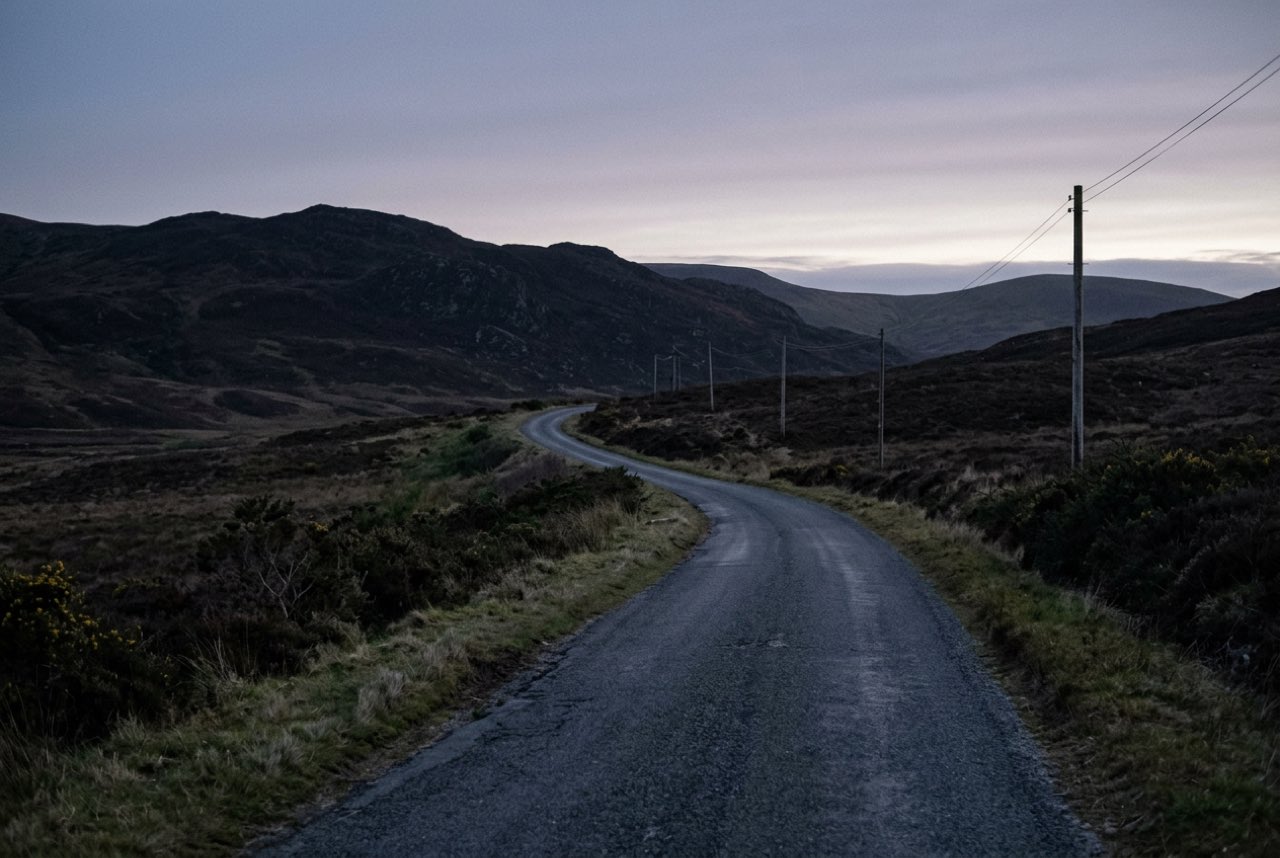
Two villages, three ways down
The northern road off the plateau runs twenty four kilometres down a gorge, loses 850 metres, and passes through seven short tunnels where the rock was simply left as the roof. It is posted at 2.20 metres of width in two places and you have no way of judging that until you are already in it. The middle road is the one people come for: four kilometres of ledge with the drop on the outside, galleries where the road doubles back inside the mountain, and a surface that has been patched every spring since it was blasted. The southern route closed in 2008 after rock came off the face above it and was replaced by a tunnel of 1.7 kilometres, which takes three minutes and shows you nothing at all.
Thirty kilometres of this is ninety minutes and you will not better it. Nothing overtakes and nothing needs to. The car in the price is compact on purpose.
Village hours are fixed and they are not flexible. The market in the first village is Sunday and Wednesday morning and the stalls are down by half past twelve. Bread reaches the second village by van at about half past seven on three mornings a week, and at eight there is none. Dinner in both places begins at a quarter past seven and the kitchen closes at nine, one sitting, four courses, and if you are still on the hill at seven you have made a decision about your evening.
sun clears the eastern wall, grass still wet, air at about 10 degrees
bread van in the square in the second village, three mornings a week, gone by eight
out of the trailhead at 1,180 metres, four hundred of climb in the first fifty minutes
bread and cheese on a slab of limestone, nothing open above the treeline
turnaround hour on the high routes, cloud already stacking over the rim
back at the car, 24 to 27 degrees in the valley air, shirt dry for the first time
the one shop reopens until seven in the first village and not at all in the second
dinner starts, one sitting, four courses, plates cleared by nine
village lights go off on a timer and the sky over the pasture is properly black
The day underground
One full day of the eight goes into the gallery under the northwestern cliffs, above the commune of Choranche, and it is held for you at a fixed hour because visits go in groups of a set size and the last one of the afternoon leaves earlier than anybody expects.
The made path runs about six hundred metres, level for most of that, and the temperature holds at 10 degrees C, 50 F, in August exactly as in February. You go in wearing what you walked in and you are cold inside ten minutes. The roof of the largest chamber carries several thousand soda straws, hollow tubes of calcite about three millimetres across and up to three metres long, grown at roughly a centimetre a century, which means the short ones started before anyone farmed the pasture overhead. They hang over a lake whose level answers to what fell on the plateau three days ago.
Near the entrance there is a tank holding a blind amphibian about twenty five centimetres long, pale, with external gills carried for life. It lives fifty to a hundred years, can go ten without eating, and it is the reason the shafts up on the surface were worth going down in the first place.
A second cave twenty minutes away is a shaft rather than a gallery, and for a few weeks in July 1944 it held a hospital, when the fighting on this plateau ended the way it ended. Both villages keep a plaque with a list of names on it and one of them has a burned gable left standing at the end of a lane. Nobody offers to explain any of it. Ask, and you will get the long answer, in French, with dates.
August on the plateau
August is the only month held because it is the only month the whole shape works in. Into early July the north facing gullies on the high reserve still carry old snow and not every summer hut is occupied. By the last week of September the light has gone by half past seven and half the places in the second village have shut for the year.
Through August the sun clears the eastern wall at about a quarter to seven and there is usable light until nine fifteen. Daytime at 1,050 metres runs 24 to 27 degrees C, 75 to 81 F, and the night falls to 9 or 10, so you sleep under a blanket in the middle of summer and want a layer for the first hour of walking. Storms build over the eastern rim from around two in the afternoon on something like one day in three, which is why every route on the list is written to put you back below the treeline by one o'clock.
To hold a week, send the form below with the Saturday you want and the number walking. This office places the reservation with the company that runs each property and the company that supplies the car, and those companies bill you directly in the ordinary way; Third Coast Dispatch Bookings LLC takes no payment at any point and holds no card details. You will have the confirmation numbers and the local telephone numbers in writing before you leave. Questions by telephone on +1 (816) 525-2846, or in writing to bookings@thirdcoastdispatch.com; a change to something already held goes to corrections@thirdcoastdispatch.com. The office is at 600 SW Jefferson St, Suite 302, Lee's Summit, MO 64063, and it works with people driving out of Kansas City and from the rest of Missouri.
Send this office a booking request
Open 24/7, this form will take a booking request whenever you write it. Nowhere on it is a card number requested and nothing is charged, because no money is ever owed to this office. Whatever reaches the form is opened in the order it landed, and an answer goes back inside one working day.
Nowhere on this page is a card number requested, and none is kept by this office anywhere. Writing costs you nothing and ties you to nothing. Asking is not the same as holding: your date belongs to whoever asks next until the operating company has confirmed it on paper and you have read what it requires of you.